The problem I wanted to solve
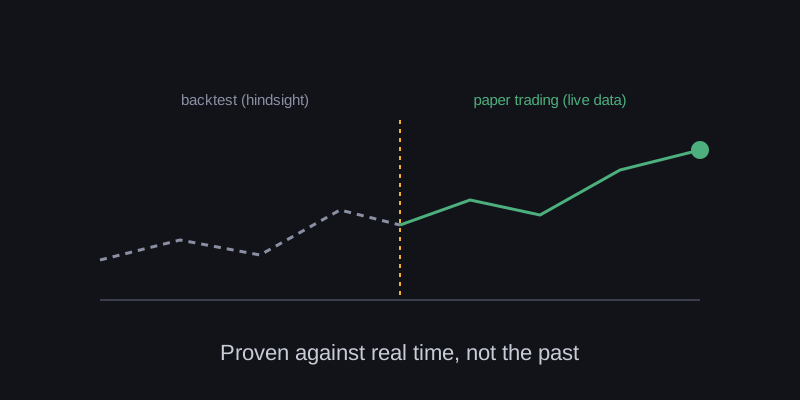
The past is a fixed answer key. Give a strategy enough parameters and enough retries against it, and it will look brilliant — not because it learned anything, but because it memorized the test. That's overfitting to hindsight, and it's the structural reason backtest-only tools produce so many strategies that die on contact with a live market.
A backtest can rule a strategy out. What it can't do, on its own, is rule one in.
What it actually produces
-
historyBacktesting, treated as a filterStrategies still run against history — but a good backtest is the entry ticket, not the verdict.
-
monitoringReal-time paper trading on live dataThe same strategy then trades forward against a market that hasn't happened yet — the test hindsight can't fake.
-
syncSessions that feed back inLive paper-trading results flow back into the system, so each session sharpens the next.
Where it stands today
QuantLab currently runs against my real positions in paper-trading mode, with live updates from those sessions feeding improvements back into the system. It's also where the fundamentals bot with the AI verification layer earns — or fails to earn — its trust, while the simpler Binance monitor keeps watch on the always-on threshold side.
How it feels to use
-
Backtest firstA strategy has to survive history before it earns live data.
-
Paper trade it forwardReal positions, live prices, zero capital at risk — performance measured against time that hasn't happened yet.
-
Let the results talk backEach session's outcomes feed back into optimization — the system improves on evidence, not conviction.
Why this one is different
Most tools stop at the backtest because the backtest is where things look best. QuantLab is built around the opposite instinct: the demo isn't the finish line, it's the audition.
No real capital touches any of this until it proves itself over real time. That line isn't a caveat — it's the design.
Nothing in this post is financial advice — it's a build log of a personal testing system.