The problem I wanted to solve
Language courses are built around grammar, vocabulary, and structure. They're rarely built around the specific fear that stops a capable speaker from actually speaking: sounding hesitant, accented, or wrong in front of another person.
That fear doesn't respond to more grammar drills. It needs a genuinely judgment-free space to practice in — repeatedly, without an audience.
What it actually produces
-
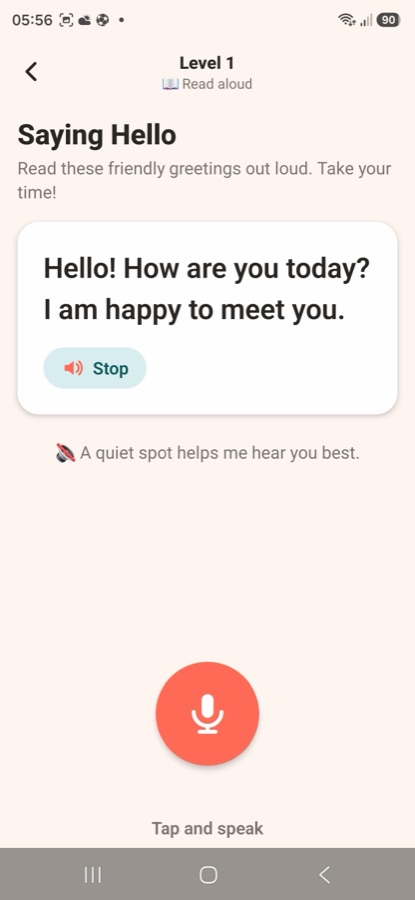
graphic_eqFeedback on how you soundPace, pauses, length, and reading match — analyzed from your actual speech, not a multiple-choice quiz.
-
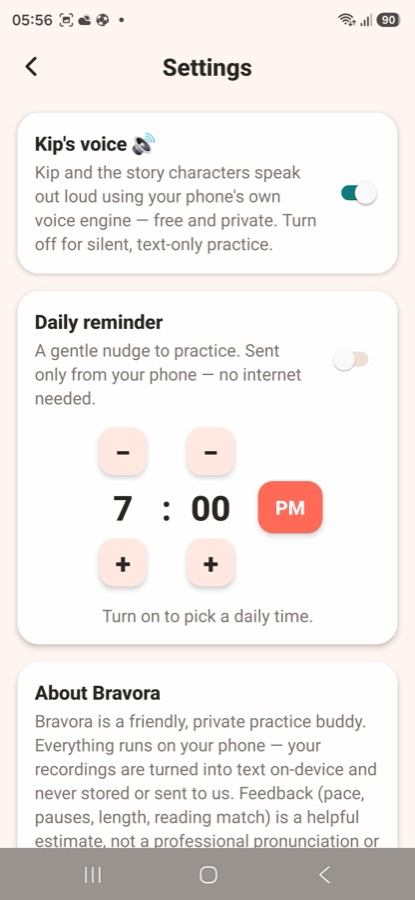
lockPrivacy by designAll audio processing happens on your device. Nothing is uploaded, nothing is stored elsewhere, nobody is listening.
-
replayUnlimited retries, zero audienceDirect feedback you can act on immediately — then try again, as many times as you want.
Who this is actually for
In concrete terms: the person prepping for a job interview in English, the freelancer about to get on a client call, the student with a university presentation next week. People with something real coming up — and nowhere comfortable to rehearse it out loud.
Why on-device processing isn't just a technical detail
Keeping the analysis on the device rather than uploading recordings anywhere means the practice stays genuinely private. Nobody is listening. Nothing is stored elsewhere.
For something as personally exposing as "I'm afraid of how I sound when I talk," that privacy isn't a nice-to-have feature — it's the thing that makes someone willing to actually use the app in the first place.
How it feels to use
-
SpeakTalk out loud, to nobody but your phone.
-
See how you soundedToo fast, too many pauses, cut too short, drifted from the text — the app tells you directly, right after you finish.
-
Try againRepeat without an audience until speaking stops feeling like a performance.
Why this one is different
The initial build is intentionally narrow: pace, pauses, length, and reading match — nothing more, done well. It isn't trying to replace a language course — it's built for the specific, underserved group courses miss: people who already understand the language and just need somewhere safe to practice being heard.
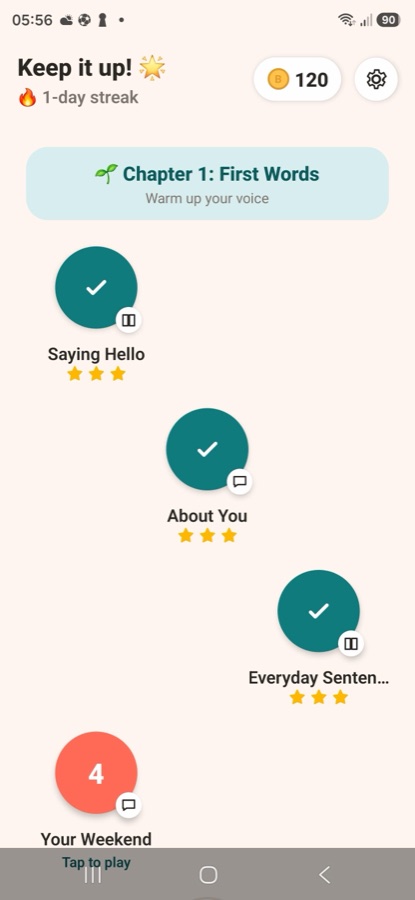
The leveled progression is now built, and it's the part I'd show first: learners start with guided intros, move up to mock calls — the kind of conversation you'd have in an interview or with a client — and work toward open debates, the hardest thing to do in a language that isn't yours. A structured path to build through, not one flat practice mode with nowhere to go.
Final testing is underway before the Play Store release. Like Tremora, it's a lab build heading for a real audience.