The problem I wanted to solve
A conversation with a bot is only worth having if it becomes something actionable. The first version lives directly on automintai.com: an AI agent, built on Claude, that talks with visitors, gathers what they actually need — their name, email, and a real description of their project — and books a meeting when there's a genuine fit.
Every conversation writes straight into the same leads system that powers the site's admin CRM, so a conversation with the bot becomes a real, actionable lead the moment it ends — not a transcript someone has to manually process later.
What it actually produces
-
chatA chatbot that does more than chatQualifies visitors on the website — name, email, a real project description — and books a meeting when there's a fit.
-
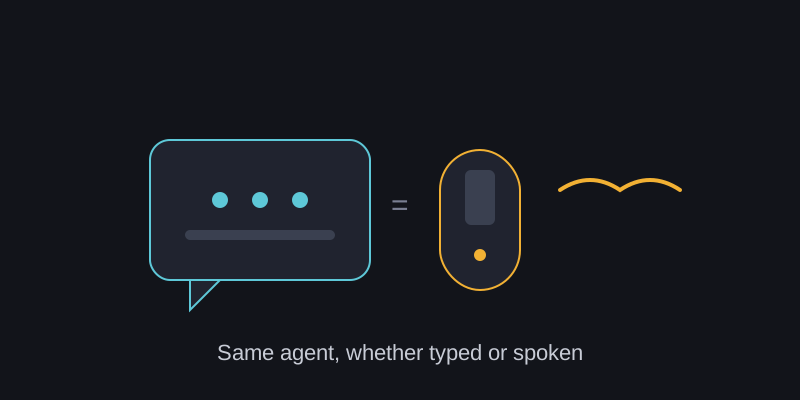
callThe same agent, on the phoneThe calling agent reuses the same persona and qualification logic — same questions, same tone, by voice.
-
hubOne destination for every leadWeb or phone, the information lands in the same leads system the admin CRM runs on.
Extending it to phone calls
Rather than building a second agent from scratch for voice, the calling agent reuses the same underlying persona and qualification logic as the website chatbot — same questions, same tone, same destination for the data it gathers. The goal was consistency: whether someone reaches out through the website or by phone, they're talking to the same "person," and their information lands in the same place either way.
How it feels to use
-
Someone reaches outThrough the chat bubble on the site, or by dialing the phone number — whichever they prefer.
-
The agent qualifies themName, email, and a real description of the project — the same flow on both channels.
-
The lead is ready the moment the conversation endsIt lands in the CRM as something actionable — no transcript processing, no copy-pasting.
Why this one is different
It would have been easy to treat the phone version as a separate project with its own logic. Keeping them unified instead means every improvement to the qualification flow — a better question, a clearer way of asking for project details — benefits both channels at once, and there's no risk of the phone version and the web version drifting into inconsistent experiences over time.
What it closed: advertising an "AI voice agent" on a site and having it actually work, rather than sit as a demo placeholder, matters more than it might seem — it's the difference between a site describing a capability and a site proving it, in real time, to whoever's evaluating it.
And what happens after the agent captures a lead? That's its own automation — capture → approve → onboard, one pipeline.