The problem I wanted to solve
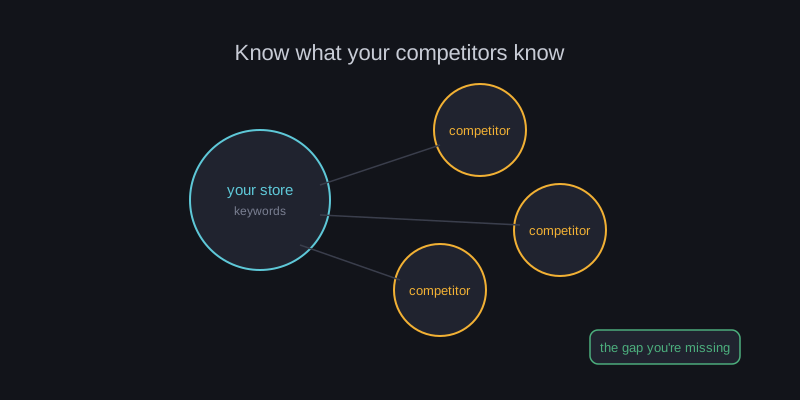
Marketplace SEO tools typically report on a seller's own listings: their keywords, their search volume, their rankings. They rarely answer the more useful question — what are the stores that are actually beating me doing differently, and is the wider category shifting in ways that affect me specifically, right now?
What it actually produces
-
checklistAn honest keyword auditYour current keyword set segmented into strong and weak performers, based on real search data rather than guesswork.
-
travel_exploreYour genuine competitorsNot a guessed list — stores that organically appear in top search positions for your own best-performing keywords.
-
compare_arrowsThe gap, made specificKeywords proven to work for close competitors that you aren't using yet — as a short, actionable list.
Watching the category, not just your store
A second component monitors a watchlist of competitors for account health signals — suspensions, a sudden run of negative reviews, or reviews the platform itself has flagged as inactive, a signal often associated with manipulated review activity. This turns "what's happening in my category" from a vague impression into an observable, trackable pattern — useful for spotting an enforcement wave or a shift in competitive behavior before it becomes common knowledge.
This monitor also shows up in my small ops tools post — same component, viewed from a different angle. There it's one of three daily checks; here it's one part of this larger suite.
How it feels to use
-
Point it at a storeThe audit runs on the seller's real keyword set and splits it into strong and weak performers.
-
Let it find who's beating youTop-ranking competitors are discovered from your own best keywords, then analyzed the same way.
-
Act on the gap listA full run — audit, competitor discovery, competitor analysis, gap comparison — completes in a few minutes and outputs directly to a usable spreadsheet, ready to act on the same day.
Why this one is different
Scraping data is the easy part. The real value sits in the multi-stage reasoning layered on top of it — taking a seller's actual weak points, finding who's genuinely outperforming them and how, and reducing all of that down to a short, specific action list instead of a wall of raw numbers.
In a typical full run, it surfaces more than 50 proven competitor keywords the shop wasn't using — not raw keyword-tool suggestions, but terms already ranking for the shop's closest real competitors.
A note on scope: this tool was built for internal, private use and is covered by a confidentiality agreement. This post describes the approach and architecture — not the specific platform or client context it operates in.