The problem I wanted to solve
The team was doing this by hand: checking whether a requested product configuration could actually be manufactured, sketching what it would look like, and estimating what it would cost to pack and ship. Manual, repeated, error-prone — and important enough that the company had previously paid an outside developer over $4,000 for a single module of this workflow. What they got back was less capable than what one module of this tool does now.
What it actually produces
-
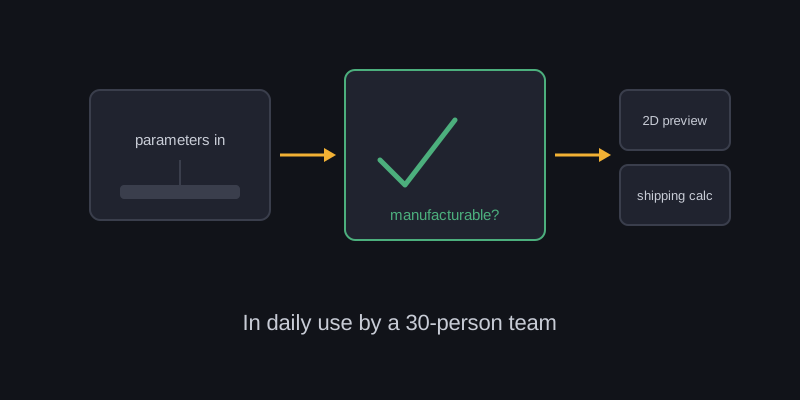
ruleConfiguration validationPhysical product parameters go in; the tool determines which configurations are actually manufacturable before anyone commits to one.
-
preview2D previews, generatedEvery valid configuration gets a preview — what it will look like, before anything is made.
-
local_shippingRealistic packaging & shippingThe tool calculates how the result actually packs and what it actually costs to ship — numbers the team can quote from.
Deployed, not demoed
This didn't go straight from my machine into someone's workflow. It went through formal testing by a specialist department before deployment — and it's now in daily production use across a 30-person team. That last part is the real benchmark: internal tools live or die on whether people actually keep using them once the novelty wears off.
How it feels to use
-
Enter the product parametersThe physical specifics of what's being requested.
-
See what's actually buildableInvalid configurations are caught immediately; valid ones get a 2D preview.
-
Quote with real numbersPackaging and shipping calculated realistically — not estimated from memory.
Why this one is different
The comparison point isn't hypothetical. The company had already bought one piece of this from an outside developer for over $4,000 — and the full tool the team now uses daily replaced it with something more capable. Custom internal software has a reputation for being expensive and fragile; done right, it's the opposite: one tool, matched exactly to how the team actually works, used every single day.
A note on scope: this tool was built for a client's internal use and is covered by a confidentiality agreement. This post describes the approach — not the company, industry specifics, or internal process it operates in.